Modern iron supplements are increasingly designed around more than the amount of iron they provide. Ingredient form, delivery system, dosage format, sensory considerations and the combination of complementary nutrients can all influence how an iron formulation is developed for today's supplement market.
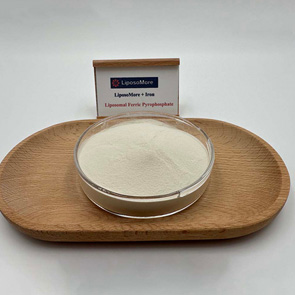
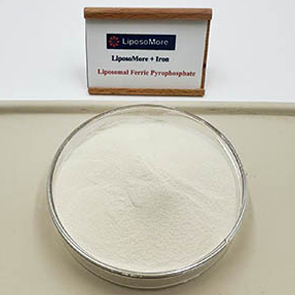
Liposomal ferric pyrophosphate is a liposomal iron ingredient that can be considered for modern iron supplement formulations. Vitamin C is commonly combined with iron because it can support the absorption of non-heme iron. However, the phrase "with vitamin C" describes a formulation combination and does not necessarily mean that ferric pyrophosphate and vitamin C are encapsulated in the same liposomal system.
This guide explains what liposomal ferric pyrophosphate is, why formulators may consider combining it with vitamin C, how it compares with other iron ingredients, and which supplement formats may be suitable. The goal is to help supplement manufacturers evaluate the formulation considerations before selecting an iron ingredient.
What Is Liposomal Ferric Pyrophosphate?
Ferric pyrophosphate is an iron compound used as an iron source in nutritional and dietary supplement formulations. When ferric pyrophosphate is incorporated into a liposomal delivery system, the ingredient is designed around a lipid-based delivery approach rather than being supplied only as a conventional iron salt.
In formulation development, the term "liposomal" describes the delivery system associated with the iron ingredient. It should not automatically be interpreted as a guarantee of superior absorption, bioavailability or clinical performance. Those outcomes depend on the specific ingredient, formulation, dosage, manufacturing process and supporting evidence.
For supplement manufacturers, liposomal ferric pyrophosphate can therefore be evaluated as an iron ingredient according to practical factors such as elemental iron content, physical form, dispersibility, stability, dosage format and compatibility with the finished product.
Vitamin C can be incorporated separately into an iron supplement formulation when the product concept calls for it. This distinction is important: a product described as liposomal ferric pyrophosphate with vitamin C does not necessarily mean that both ingredients are encapsulated within the same liposomal structure.
Why Combine Liposomal Ferric Pyrophosphate with Vitamin C?
Vitamin C is commonly considered alongside iron because it has an established role in supporting the absorption of non-heme iron. For formulators, this makes vitamin C a relevant complementary nutrient when developing iron-focused supplement products.
The combination can also provide a straightforward nutritional positioning for finished products that are designed to deliver iron together with another recognized nutrient. However, the formulation rationale should be based on the intended serving, target consumer, regulatory requirements and the characteristics of the finished dosage form rather than assuming that adding more vitamin C will always improve product performance.
Another important consideration is how the two ingredients are delivered. Vitamin C may be supplied as a separate ingredient while ferric pyrophosphate remains the liposomal iron component. Co-encapsulation should only be described when the manufacturing process and product specifications actually support it.
Formulators should also evaluate compatibility, stability and processing conditions when combining iron and vitamin C. The appropriate ingredient ratio and processing method should be established through formulation development and product-specific testing rather than treated as a universal standard.
Liposomal Ferric Pyrophosphate vs Other Iron Ingredients
No single iron ingredient is automatically the best choice for every supplement. Selection should reflect the formulation objective, dosage form, iron requirement, processing conditions and finished-product specifications.
Iron ingredient | Typical formulation consideration | What formulators should evaluate |
Liposomal ferric pyrophosphate | Liposomal delivery combined with a ferric iron source | Elemental iron, delivery system, stability, dosage form and application fit |
Ferrous sulfate | Conventional and widely used iron source | Elemental iron level, formulation compatibility and sensory considerations |
Ferrous fumarate | Conventional iron source with a relatively high elemental iron content | Dose, finished-product format and regulatory requirements |
Ferric pyrophosphate | Ferric iron source used in nutritional formulations | Physical form, dispersibility, iron content and application requirements |
Chelated iron ingredients | Iron associated with a chelating ligand | Chelation type, dose, stability and target formulation |
When comparing these ingredients, avoid ranking them solely by isolated absorption figures from different studies. Study design, dosage, population, formulation and measurement methods can differ substantially. A more useful B2B comparison considers the complete specification and how well an ingredient fits the intended finished product.
For manufacturers evaluating a liposomal iron ingredient, documentation should include the relevant specification, elemental iron content, physical characteristics, recommended storage conditions and applicable quality or regulatory documentation. These details are more useful for product development than a simple claim that one iron source is universally superior.
What Supplement Formats Suit Liposomal Ferric Pyrophosphate?
Liposomal ferric pyrophosphate can be evaluated for several supplement formats, but suitability depends on the ingredient's physical properties and the requirements of the finished formulation.
Supplement format | Key formulation considerations |
Capsules | Serving size, powder loading, stability and compatibility with excipients |
Tablets | Compression behavior, dosage, excipient compatibility and stability |
Powder sachets | Dispersibility, moisture control, flowability and taste considerations |
Powder blends | Mixing uniformity, flowability, moisture and storage |
Liquid formulations | Dispersion, pH compatibility, processing conditions and storage stability |
For liquid or beverage applications in particular, additional product-specific testing may be required. A formulation that performs well as a dry powder does not automatically have the same stability or dispersion behavior in a liquid system. The same principle applies when vitamin C is added: the compatibility of both ingredients should be assessed within the actual finished-product matrix.
FAQs About Liposomal Ferric Pyrophosphate
What is liposomal ferric pyrophosphate?
It is ferric pyrophosphate used as an iron source in a liposomal delivery system. The term describes the ingredient and its delivery approach; it does not by itself guarantee a specific absorption or clinical outcome.
Does liposomal ferric pyrophosphate contain vitamin C?
Not necessarily. Liposomal ferric pyrophosphate refers to the liposomal iron ingredient itself. Vitamin C can be added separately when a finished supplement formulation is designed to include both nutrients.
Why is vitamin C added to iron supplements?
Vitamin C is commonly considered with iron because it can support the absorption of non-heme iron. The appropriate amount and formulation approach should be determined according to the finished product and applicable requirements.
Is liposomal ferric pyrophosphate better than conventional iron ingredients?
There is no universal answer. Ingredient selection depends on the desired dosage, delivery system, physical properties, finished-product format, regulatory requirements and available product-specific evidence.
What supplement formats can use liposomal ferric pyrophosphate?
Depending on the ingredient specification and formulation, manufacturers may evaluate it for capsules, tablets, powders and other nutritional formats. Liquid applications require additional assessment of dispersion, pH and stability.
How should manufacturers evaluate a liposomal iron ingredient?
Review the specification, elemental iron content, physical form, stability, storage requirements, quality documentation, regulatory status and compatibility with the intended finished dosage form.
Formulation Support for Liposomal Iron Ingredients
For supplement manufacturers evaluating liposomal iron ingredients, Liposomal ferric pyrophosphate supplier resources can provide a starting point for reviewing the ingredient specification and discussing application requirements. When a formulation concept combines liposomal ferric pyrophosphate with vitamin C, the appropriate vitamin C source, dosage, stability and finished-product format should be evaluated according to the specific product requirements.
Note: This article discusses formulation considerations and is not intended to make disease-treatment claims or replace product-specific technical, regulatory or clinical evaluation.
Natalie Wu
Hey Guys, I am Natalie Wu, an R&D researcher at LiposoMore. I graduate from College with a Master’s Degree in Bioengineering, I would like to share news and the science behind liposomal ingredients. At LiposoMore, we drive ingredient development with scientific precision and a passion for advanced nutritional technologies.
 EN
EN
 jp
jp  ko
ko  fr
fr  de
de  es
es  ru
ru  pt
pt  ar
ar  pl
pl  vi
vi