EN
EN
 jp
jp  ko
ko  fr
fr  de
de  es
es  ru
ru  pt
pt  ar
ar  pl
pl  vi
vi 
Jan-09-2026

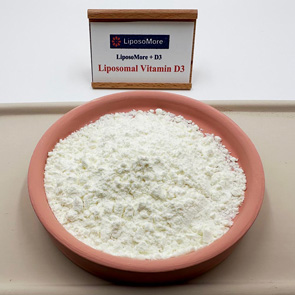
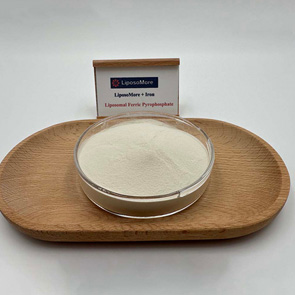
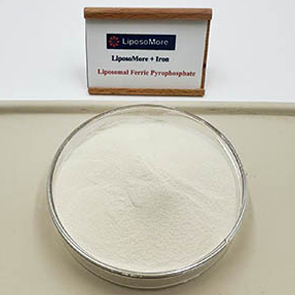
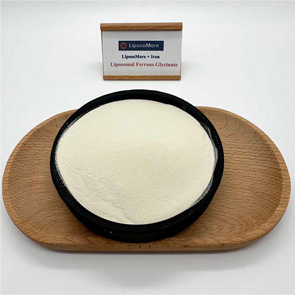
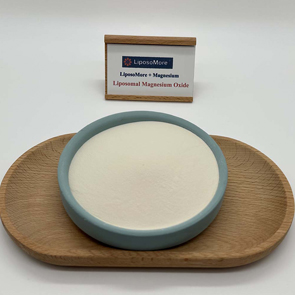
Vitamin D3 is widely used in nutritional supplements, but formulation decisions become more complex when brands need a powder ingredient that can work across modern dosage formats. Beyond potency, formulators need to consider how the ingredient is delivered, how it disperses, how stable it remains during processing and storage, and whether the format fits the intended finished product.
Liposomal vitamin D3 powder is a formulation-oriented form of vitamin D3 in which the fat-soluble nutrient is associated with a phospholipid-based delivery system and supplied as a powder. For supplement development, buyers should evaluate potency, water dispersibility, physical form, stability, dosage-form compatibility, quality specifications and supplier documentation before selecting an ingredient. The best format depends on the finished product rather than on a single universal dosage form.
The sections below explain what liposomal vitamin D3 powder is, why it may be considered in supplement formulations, how different product formats affect ingredient selection, and which specifications supplement brands should check before commercial sourcing.
Vitamin D3, also known as cholecalciferol, is a fat-soluble vitamin used in dietary supplements and nutritional products. In a liposomal system, phospholipid structures are used as a delivery approach for the vitamin. Because vitamin D3 is lipophilic, this type of formulation can be designed to improve its handling and dispersion characteristics compared with a conventional oil-only presentation.
The word 'powder' is especially important for B2B formulation. A powder ingredient can be weighed, blended and incorporated into dry product systems, while a water-dispersible powder may also broaden the range of applications that formulators can evaluate. Water-dispersible does not mean that the ingredient should automatically be described as fully water-soluble; those terms should be kept distinct in technical documentation.
For commercial product development, the ingredient should be assessed through measurable specifications such as vitamin D3 potency, appearance, loss on drying, heavy-metal limits, microbiological limits and storage requirements. These details help determine whether the ingredient is suitable for the intended manufacturing process and finished dosage form.
The formulation value of liposomal vitamin D3 should be considered from a delivery and product-development perspective rather than only from consumer-facing health claims. Vitamin D3 is fat-soluble, so formulators often need to consider how the ingredient is protected, dispersed and incorporated into the finished system.
A phospholipid-based delivery system can provide a different formulation route for vitamin D3 and may help protect the nutrient from environmental exposure while improving dispersion in suitable media. For brands developing powders, sachets or liquid-style products, these properties can be relevant when conventional oil-based vitamin D3 does not fit the desired product format.
However, 'liposomal' should not be treated as an automatic guarantee of a specific absorption rate or superior clinical outcome. Those claims depend on the actual formulation, dosage, manufacturing process and supporting evidence. From a procurement standpoint, buyers should focus on product-specific specifications, stability information and application data rather than relying on the delivery-system name alone.
There is no single best finished format for every vitamin D3 product. The appropriate choice depends on the brand concept, serving size, manufacturing process, consumer experience and the technical characteristics of the ingredient.
Format | Why It May Be Considered | Key Formulation Checks |
Powder blends | Useful for dry nutrition mixes and multi-ingredient formulas | Blend uniformity, flowability, moisture control, potency distribution |
Sachets | Supports pre-measured single-serving formats | Dispersibility, serving size, taste system, moisture barrier |
Softgels | Common format for fat-soluble nutrients | Loading, carrier compatibility, shell compatibility, stability |
Liquid products | Can support convenient liquid or drop-style concepts | Dispersion stability, pH, light exposure, oxidation, storage |
Beverage-style formulas | Potential option when the ingredient is sufficiently dispersible | Aqueous dispersion, processing conditions, sedimentation, shelf stability |
A powder described as dispersible in water may offer more flexibility for sachets and liquid-style concepts, but finished-product testing is still necessary. pH, temperature, shear, other active ingredients, flavor systems and packaging can all affect how a vitamin D3 formulation performs over its shelf life.
For supplement brands and contract manufacturers, sourcing should move beyond a simple comparison of price per kilogram. The ingredient specification and the supplier's technical documentation determine whether the material is suitable for consistent commercial production.
Sourcing Item | What to Verify |
Vitamin D3 potency | Confirm the stated IU/g specification and the test method used to verify it. |
Physical appearance | Review color, odor and powder condition as part of incoming quality control. |
Water dispersibility | Clarify whether the product is dispersible or soluble, and evaluate performance in the intended matrix. |
Moisture control | Review loss-on-drying limits because moisture can influence storage and powder handling. |
Heavy metals | Check limits for total heavy metals and relevant elements such as lead, mercury, cadmium and arsenic. |
Microbiological quality | Review total plate count, molds and yeasts, and pathogen requirements. |
Stability and storage | Request storage guidance and, where available, stability information relevant to the intended shelf life. |
Application compatibility | Confirm suitability for powders, sachets, liquids, softgels or other formats through formulation testing. |
Quality documentation | Review specification sheets, certificates of analysis and regulatory documents needed for the target market. |
Batch consistency | For commercial scale-up, confirm that potency and physical characteristics can be maintained across production batches. |
A strong sourcing decision therefore combines nutritional potency with formulation performance and quality control. Buyers should request enough technical information to evaluate the ingredient under their own manufacturing conditions instead of assuming that all liposomal vitamin D3 powders perform the same way.
It is a powdered vitamin D3 ingredient formulated with a phospholipid-based liposomal delivery system. It is intended for use as an ingredient in supplement and nutrition product development.
Not necessarily. A product may be described as water-dispersible, which means it can disperse in aqueous media, but that is different from being fully water-soluble. Buyers should follow the supplier's technical specification.
Potency should be confirmed from the product specification and certificate of analysis, typically expressed in IU per gram. The appropriate potency depends on the formulation and intended serving.
Depending on the specific ingredient and formulation work, it may be evaluated for powder blends, sachets, softgels, liquids and other nutritional formats.
Key checks include vitamin D3 potency, appearance, moisture, heavy metals, microbiological limits, storage requirements and batch documentation.
No. Liposomal delivery is a formulation approach, but any specific bioavailability claim should be supported by evidence for the actual ingredient and finished formulation.
For supplement brands, formulators and contract manufacturers evaluating a vitamin D3 ingredient for modern dosage formats, Liposomal Vitamin D3 Powder from LiposoMore is currently specified at 100,000 IU/g and supplied as a white-to-light-yellow powder described as dispersible in water. The product page also lists heavy-metal and microbiological specifications that buyers can review as part of their sourcing process. Final suitability should be confirmed against the target formula, processing conditions and regulatory requirements.
Note: This article is intended for ingredient and formulation information. It does not replace product-specific technical, regulatory or clinical evaluation.