Choosing a vitamin D3 powder supplier is often straightforward at the sample stage. The bigger question comes later: can the supplier deliver the same level of quality when the product moves into regular manufacturing?
For supplement companies, that question involves much more than vitamin D3 content. The ingredient needs to fit the intended dosage form, remain stable through storage and transportation, meet the required quality specifications, and be available in a consistent form from batch to batch. These considerations become even more important when sourcing liposomal vitamin d3, where the delivery system is part of the ingredient's overall performance.
That is why selecting a Liposomal Vitamin D3 Powder manufacturer should be treated as a supplier-qualification decision rather than a simple purchasing exercise. The following factors can help manufacturers assess whether a potential supplier is suitable for both product development and long-term commercial production.
What Quality Standards Should a Reliable Vitamin D3 Powder Supplier Meet?
A supplier's quality system is usually more revealing than a product brochure. Manufacturers should look beyond statements such as "high purity" and ask how quality is actually controlled throughout production.
This starts with raw material management. A reliable supplier should have defined specifications for incoming materials, controlled manufacturing procedures, documented batch records, and a process for reviewing and releasing finished batches. Traceability is equally important. If a problem is identified in a finished supplement months after production, the manufacturer needs to be able to trace the ingredient back to its source and relevant production records.
Relevant certifications can provide useful evidence of a supplier's manufacturing and quality practices, but certification alone should not be the end of the evaluation. Manufacturers should understand what the supplier's quality system covers and whether it is appropriate for the intended application and target market.
There is also a practical difference between conventional vitamin D3 ingredients and liposomal vitamin d3. A liposomal ingredient may involve carrier materials and additional processing steps, so the supplier should be able to define the finished ingredient clearly and explain which quality attributes are routinely controlled.
For this reason, an experienced Liposomal Vitamin D3 Powder manufacturer should be able to discuss its specifications and quality controls in concrete terms rather than relying entirely on general marketing claims.
How Can You Verify the Purity and Potency of Vitamin D3 Powder?
Manufacturers should never determine ingredient quality from appearance or a supplier's stated potency alone. Analytical results provide the more useful starting point for qualification.
A product specification should clearly state the required vitamin D3 content and other relevant quality attributes. The corresponding certificate of analysis should then show the actual results for the supplied batch. It is worth checking whether the testing method is appropriate for the material and whether the reported results are generated under a controlled quality system.
Potency is particularly important for supplement manufacturing because the ingredient ultimately contributes to the declared amount of vitamin D3 in the finished product. However, potency is only one part of the assessment. Depending on the product specification, manufacturers may also need to consider identity, moisture, microbiological quality, contaminants, physical appearance, dispersibility, and other characteristics relevant to processing.
When evaluating liposomal vitamin d3, manufacturers should also ask how the supplier defines the quality of the liposomal system itself. The exact parameters will depend on the supplier's formulation and specification, but the important point is that the ingredient should be characterized according to what it actually is, rather than being evaluated as if it were simply conventional vitamin D3 powder.
The same principle applies when selecting a Liposomal Vitamin D3 Powder manufacturer. A useful supplier should be able to explain its testing approach and provide documentation that allows the buyer's quality team to make an informed assessment.
| Quality Area | What to Review | Why It Matters |
|---|
| Identity | Ingredient identity and defined specification | Confirms that the material matches the approved ingredient |
| Potency | Vitamin D3 assay and applicable acceptance criteria | Supports dosage consistency in finished supplements |
| Microbiological Quality | Applicable microbial specifications and test results | Helps maintain appropriate raw material quality |
| Contaminants | Testing relevant to the ingredient and destination market | Supports product safety and market requirements |
| Physical Properties | Appearance, moisture, dispersibility, and other defined attributes | Can affect handling and formulation performance |
| Documentation | COA, specification, traceability, and supporting records | Allows proper supplier and batch qualification |
What Testing and Documentation Should a Vitamin D3 Powder Supplier Provide?
Good documentation saves time during supplier qualification and becomes even more valuable once an ingredient enters routine production. At a minimum, manufacturers should be able to obtain a current product specification and an applicable certificate of analysis for supplied batches.
The specification should make clear what the supplier actually guarantees. A COA, meanwhile, should provide the test results for the particular batch rather than simply repeating generic product information.
Depending on the application and destination market, additional documentation may be needed. This can include manufacturing certifications, allergen information, food-safety documentation, contaminant testing, origin information, and other statements required by the manufacturer's internal quality system or regulatory process.
For liposomal vitamin d3, technical documentation is particularly useful because manufacturers may need to understand more than the vitamin D3 assay. Information about the composition of the delivery system, recommended storage conditions, packaging, shelf life, and handling can all affect how the ingredient is incorporated into a finished supplement.
Another point that is easy to overlook is change control. Suppose a supplier changes an ingredient source, production process, specification, or manufacturing location. The supplement manufacturer should have a clear way of knowing about that change before it creates an unexpected difference in production.
A dependable Liposomal Vitamin D3 Powder manufacturer should therefore be able to support the buyer's quality team with consistent documentation throughout the supplier relationship, not just during the initial quotation stage.
Why Do Stability and Storage Conditions Matter When Selecting Vitamin D3 Powder?
An ingredient can meet its specification when it leaves the factory and still encounter problems if it is poorly stored afterward. Temperature, moisture, light, oxygen exposure, packaging, and transportation conditions can all influence the stability of sensitive ingredients.
Manufacturers should therefore review the supplier's recommended storage conditions before approving a vitamin D3 powder. Shelf-life information should also be supported by appropriate stability evaluation rather than being treated as a number that applies under every possible storage condition.
This deserves particular attention with liposomal vitamin d3. The ingredient combines vitamin D3 with a delivery system, so manufacturers may need to consider not only whether the vitamin remains within specification but also whether relevant physical characteristics remain suitable over the expected storage period.
Packaging is part of this discussion. Manufacturers should understand how the ingredient is packaged when supplied, what environmental conditions are recommended, and whether any additional precautions are necessary once the original package has been opened.
It is also useful to consider the manufacturer's own logistics. A raw material may spend time in transit, in a warehouse, and on the production floor before it becomes part of a finished supplement. The storage guidance provided by a Liposomal Vitamin D3 Powder manufacturer should therefore be practical enough to apply across this entire chain.
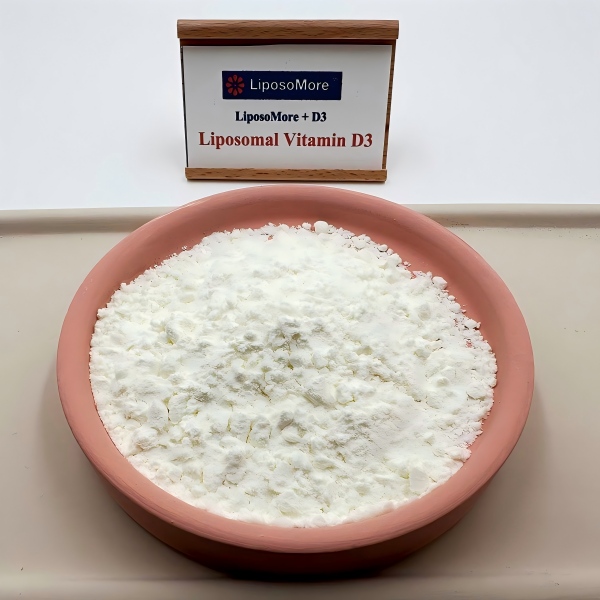
How Does a Supplier’s Production Capacity Affect Supplement Manufacturing?
A sample can tell you whether an ingredient works in a formulation. It cannot, by itself, tell you whether the supplier can support the product six months or two years later.
Once a supplement moves from development to commercial production, purchasing requirements often become more predictable and more demanding. Manufacturers need confidence that future batches will be available on schedule and manufactured according to the same approved specifications.
This is why production capacity should be considered alongside quality consistency. A supplier may have sufficient equipment but still struggle with lead times, batch scheduling, quality-control resources, or sudden increases in demand.
For liposomal vitamin d3, scale-up deserves particular attention. Manufacturing processes that work well at development scale need to remain appropriately controlled as production volumes increase. Physical properties and processing behavior should remain within the agreed specifications rather than changing significantly from one production scale to another.
Manufacturers can also review the different ingredient solutions available through Liposomore's product portfolio when assessing whether a supplier's capabilities correspond with their intended supplement applications.
The right Liposomal Vitamin D3 Powder manufacturer is therefore not necessarily the supplier offering the lowest initial quotation. It is the one that can combine acceptable quality with dependable production, documentation, communication, and supply continuity.
What Should Manufacturers Consider Before Choosing a Vitamin D3 Powder Supplier?
By the time a manufacturer reaches the final supplier-selection stage, the question should be broader than "Is this vitamin D3 powder good?" The more useful question is whether the supplier can consistently provide an ingredient that works for the manufacturer's specific product and production system.
Start with the specification. Confirm that the supplier's stated quality parameters match the requirements of the finished supplement. Then review representative analytical results and supporting documentation. If the ingredient is new to the manufacturing process, a sample or production trial can provide useful information about handling and formulation performance.
For liposomal vitamin d3, manufacturers should also clarify how the ingredient is intended to be used. Powder characteristics, dispersion behavior, processing conditions, packaging, and storage can vary between formulations, so supplier discussions are more productive when the intended application is clearly explained.
Commercial factors should then be considered in the context of the expected relationship. Minimum order quantities, lead times, packaging formats, production scalability, and supply continuity all matter, particularly for products expected to remain in the market for an extended period.
Communication is another practical test. If a supplier can answer technical questions clearly, provide the requested documentation without unnecessary delays, and explain how quality is maintained, that is useful evidence of how the relationship may work after the purchase order has been issued.
For manufacturers currently assessing liposomal vitamin d3 for a new or existing supplement, discussing the formulation requirements directly with Liposomore can help clarify whether the available ingredient is appropriate for the project. Manufacturers can contact the Liposomore team with their technical and sourcing requirements for a more specific discussion.
Conclusion
The most reliable vitamin D3 supplier is not simply the one with an attractive specification or competitive price. A supplier becomes valuable when its quality system, analytical testing, documentation, storage guidance, production capability, and communication continue to perform reliably after the initial order.
This is particularly relevant when selecting liposomal vitamin d3, because manufacturers need to consider both vitamin D3 quality and the characteristics of the delivery system. An experienced Liposomal Vitamin D3 Powder manufacturer should be able to explain those characteristics clearly and provide the information needed for proper supplier qualification.
Taking the time to assess these factors before commercial purchasing can reduce avoidable sourcing problems and make the transition from formulation development to routine supplement manufacturing much smoother.
FAQ
1. What should manufacturers check first when choosing a vitamin D3 powder supplier?
Start with the product specification, quality system, analytical testing, and batch documentation. These provide the foundation for determining whether the ingredient is suitable for further evaluation.
2. How can the potency of vitamin D3 powder be verified?
Review the supplier's certificate of analysis and the analytical method used to determine vitamin D3 content. Independent testing can also be considered during initial supplier qualification.
3. What documents should a vitamin D3 supplier provide?
A product specification and applicable batch COA are fundamental. Depending on the market and application, manufacturers may also need manufacturing certifications, allergen information, contaminant testing, origin information, and other quality documents.
4. Why are storage conditions important for liposomal vitamin D3?
Storage conditions can affect ingredient stability and relevant physical properties. Manufacturers should follow the supplier's validated or recommended storage requirements throughout transportation, warehousing, and production.
5. Does production capacity affect supplier selection?
Yes. A supplier needs to maintain consistent quality and reliable delivery as purchasing volumes increase. Commercial production capability, lead times, batch consistency, and supply continuity should all be considered.
6. What makes a good Liposomal Vitamin D3 Powder manufacturer?
A good Liposomal Vitamin D3 Powder manufacturer combines controlled production with transparent specifications, appropriate testing, reliable documentation, practical technical support, and the ability to maintain consistent supply for commercial supplement manufacturing.
Natalie Wu
Hey Guys, I am Natalie Wu, an R&D researcher at LiposoMore. I graduate from College with a Master’s Degree in Bioengineering, I would like to share news and the science behind liposomal ingredients. At LiposoMore, we drive ingredient development with scientific precision and a passion for advanced nutritional technologies.
 EN
EN
 jp
jp  ko
ko  fr
fr  de
de  es
es  ru
ru  pt
pt  ar
ar  pl
pl  vi
vi