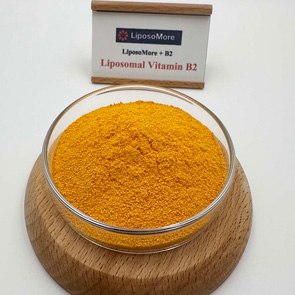
Vitamin B2, also known as riboflavin, is an established nutritional ingredient used in a wide range of dietary supplements and fortified products. Yet for manufacturers developing newer delivery systems, the challenge is not simply finding a source of riboflavin. The way vitamin B2 is incorporated into a formulation can influence its handling, stability, and suitability for the finished dosage form.
This is where liposomal technology has attracted attention. By incorporating vitamin B2 into a phospholipid-based delivery system, liposomal vitamin B2 offers a different formulation approach from conventional riboflavin ingredients. For manufacturers considering this technology, the important question is not whether liposomal delivery is universally better, but whether its characteristics match the requirements of a particular supplement.
Liposomal Riboflavin therefore needs to be evaluated from a formulation perspective. Its composition, particle characteristics, stability, processing conditions, and intended dosage form all influence the final result. Understanding these factors can help supplement manufacturers decide when liposomal technology makes practical sense for vitamin B2.
How Does Liposomal Technology Work in Vitamin B2 Formulation?
Liposomes are microscopic structures generally formed from phospholipids. These phospholipids can organize into bilayer structures that provide an environment for incorporating selected active ingredients. In a liposomal vitamin B2 formulation, riboflavin is associated with this lipid-based delivery structure rather than being supplied only as a conventional free-form vitamin powder.
The exact formulation mechanism depends on the composition and manufacturing process used by the supplier. Factors such as phospholipid source, ingredient ratios, processing conditions, particle characteristics, and the physical form of the finished material can all affect the resulting system.
This distinction is important when manufacturers evaluate liposomal vitamin B2. Liposomal technology should not be treated as a simple coating applied to riboflavin. The final ingredient is a formulated delivery system whose characteristics need to be considered alongside the vitamin itself.
For supplement developers, this can create additional possibilities when designing products that require a differentiated delivery concept. It also means that supplier qualification should include an understanding of how the liposomal system is manufactured and characterized.
With Liposomal Riboflavin, manufacturers should therefore look beyond the declared vitamin B2 content and examine the overall ingredient specification. A supplier with experience in liposomal ingredients should be able to explain the composition, physical characteristics, storage requirements, and recommended application of the material.
What Advantages Does Liposomal Delivery Offer for Vitamin B2?
The main reason manufacturers consider liposomal delivery is that it provides a formulation platform that differs from conventional vitamin delivery. A liposomal system can create an association between the active ingredient and phospholipid structures, potentially changing how the ingredient behaves within a formulation.
For vitamin B2, this approach can be relevant when a manufacturer wants to develop a more specialized supplement rather than rely on a conventional riboflavin format. The technology can also support product positioning around advanced delivery systems, provided that the manufacturer's claims remain consistent with available scientific and regulatory evidence.
Another consideration is formulation flexibility. Depending on the supplier's technology, liposomal vitamin B2 may be developed for different supplement formats and processing requirements. The suitability of the ingredient will depend on factors such as concentration, powder properties, dispersion behavior, and the composition of the finished product.
It is also important not to overstate what liposomal delivery can achieve. The presence of a liposomal structure does not automatically guarantee superior nutritional outcomes in every application. Manufacturers should assess the actual ingredient specification, supporting analytical data, and intended use before making a formulation or marketing decision.
In this sense, Liposomal Riboflavin is best viewed as a formulation option rather than a universal replacement for conventional vitamin B2. Its value depends on whether the delivery technology solves a specific formulation or product-development requirement.
How Does Liposomal Technology Affect Vitamin B2 Stability?
Stability is an important consideration when developing any vitamin-based ingredient. Riboflavin is sensitive to light, which is why exposure conditions need to be considered during manufacturing, packaging, transportation, and storage.
A liposomal system introduces another layer of formulation considerations. The stability of liposomal vitamin B2 depends not only on the riboflavin itself but also on the integrity and characteristics of the surrounding delivery system. Moisture, temperature, light exposure, oxygen, packaging, and storage time may all need to be considered during product development.
This makes stability data particularly useful when comparing different suppliers. Manufacturers should ask what storage conditions are recommended, how shelf life is established, and which quality attributes are monitored during stability evaluation.
The physical stability of the powder also matters. If a liposomal ingredient is intended to be incorporated into a dry supplement, changes in moisture content, flow properties, dispersibility, or other physical characteristics may affect manufacturing performance even when the vitamin assay remains within specification.
For Liposomal Riboflavin, manufacturers should therefore evaluate chemical and physical stability together. A supplier that can provide clear stability information and practical storage guidance gives formulation teams a better basis for assessing how the ingredient will behave throughout its expected supply and manufacturing cycle.
What Factors Affect the Performance of Liposomal Vitamin B2?
There is no single characteristic that determines the performance of a liposomal vitamin ingredient. The result comes from the interaction between formulation composition, manufacturing process, raw material quality, and the conditions under which the finished ingredient is handled.
The phospholipid system is one important factor. Different phospholipid sources and compositions can produce different physical characteristics. The ratio between riboflavin and other formulation components can also influence the concentration and handling properties of the finished ingredient.
Particle characteristics are another consideration. Depending on the specific product, particle size distribution and related physical properties may influence dispersion and processing behavior. Manufacturers should evaluate these characteristics according to the requirements of their own formulation rather than assuming that one specification will suit every application.
Processing conditions can also make a difference. Heat, moisture, shear, drying conditions, and other manufacturing variables may affect the final properties of liposomal vitamin B2. This is why an ingredient that performs well in one dosage form may require additional formulation evaluation in another.
The finished product itself should not be overlooked. Excipients, pH, water activity, packaging materials, and manufacturing conditions can all interact with the ingredient. For a new Liposomal Riboflavin formulation, laboratory testing and, where appropriate, pilot-scale trials can provide more useful information than relying solely on a supplier's general product description.
Which Supplement Formats Are Suitable for Liposomal Vitamin B2?
The appropriate dosage form depends on the physical properties of the ingredient and the manufacturer's formulation objectives. A liposomal vitamin B2 ingredient may be considered for products where a differentiated delivery system is part of the formulation strategy, but compatibility needs to be assessed on a case-by-case basis.
Powder-based supplements are one practical area to evaluate because a dry liposomal vitamin B2 ingredient can potentially be incorporated into blends, sachets, or other powdered formulations. However, manufacturers need to consider moisture sensitivity, uniform distribution, flowability, and the processing conditions used during blending and filling.
Capsules and tablets may also be considered, depending on the ingredient's bulk density, compression behavior, concentration, and compatibility with other components. The presence of a liposomal system may require formulation adjustments compared with conventional riboflavin.
Liquid and ready-to-mix products require a different evaluation. Dispersion, physical stability, interactions with other ingredients, and storage conditions become more important when water is present in the finished formulation.
Rather than assuming that Liposomal Riboflavin is suitable for every dosage form, manufacturers should start with the finished-product requirements and work backward to the ingredient specification. Reviewing the available liposomal ingredients and formulation solutions in Liposomore's product portfolio can be a useful starting point when comparing potential options.
What Should Manufacturers Consider When Choosing Liposomal Vitamin B2?
Supplier selection should begin with the ingredient specification, but it should not end there. For a specialized ingredient such as liposomal vitamin b2, manufacturers need enough technical information to understand what they are actually purchasing and how it is expected to perform.
| Evaluation Factor | What Manufacturers Should Review | Why It Matters |
|---|
| Vitamin B2 Content | Declared riboflavin content and applicable specification | Provides the basis for formulation and dosage calculations |
| Liposomal Characteristics | Relevant physical and formulation parameters | Helps determine whether the ingredient fits the intended application |
| Stability | Storage conditions, shelf life, and available stability information | Supports quality during transportation and storage |
| Testing | Identity, assay, microbiological quality, and applicable contaminant testing | Supports ingredient qualification and batch release |
| Processing Behavior | Dispersion, flowability, moisture sensitivity, and other relevant properties | Can influence manufacturing efficiency and finished-product consistency |
| Technical Support | Application guidance and communication during formulation | Helps resolve development and scale-up questions |
Manufacturers should also pay attention to consistency between batches. A liposomal ingredient may have more formulation-specific characteristics than a basic vitamin raw material, making supplier process control particularly relevant. The supplier should be able to explain how critical quality attributes are monitored and how changes to raw materials or manufacturing processes are managed.
Documentation is another part of the qualification process. A current specification and applicable certificate of analysis are fundamental, while additional technical or quality documents may be required depending on the target market and finished-product category.
For Liposomal Riboflavin, communication with the supplier can be especially valuable during product development. Manufacturers may need to discuss dosage form, expected production scale, storage conditions, blending or processing requirements, and other formulation details before confirming that the ingredient is appropriate.
A supplier that can discuss these issues clearly is generally more useful than one that only provides a standard quotation. For manufacturers evaluating liposomal vitamin B2 for a specific supplement project, sharing the intended application and technical requirements with Liposomore's technical and commercial team can help determine whether the ingredient is a suitable match.
Conclusion
Liposomal technology is potentially suitable for vitamin B2 because it provides a phospholipid-based delivery approach that differs from conventional riboflavin ingredients. However, its value should be assessed according to the actual requirements of the supplement rather than assumed simply because the ingredient is described as liposomal.
For liposomal vitamin B2, manufacturers should consider the composition of the delivery system, vitamin B2 content, physical properties, stability, processing behavior, dosage form, and available quality documentation. These factors collectively determine whether the ingredient can perform reliably in a particular manufacturing process.
Selecting a capable Liposomal Riboflavin supplier is therefore as much about technical compatibility as it is about ingredient quality. A supplier that can provide transparent specifications, appropriate testing, useful stability information, and formulation support can make the transition from ingredient evaluation to commercial production considerably more straightforward.
FAQ
1. What is liposomal vitamin B2?
Liposomal vitamin b2 is a vitamin B2 formulation in which riboflavin is incorporated or associated with a phospholipid-based liposomal delivery system. Its exact composition and characteristics depend on the formulation technology used by the supplier.
2. What is Liposomal Riboflavin used for?
Liposomal Riboflavin can be considered for supplement formulations where manufacturers want to use a liposomal delivery approach for vitamin B2. Its suitability depends on the dosage form, formulation requirements, and ingredient specifications.
3. Is liposomal vitamin B2 more stable than conventional riboflavin?
It should not be assumed automatically. Riboflavin is sensitive to light, while a liposomal formulation introduces additional physical stability considerations. Actual stability should be evaluated using product-specific data.
4. Which supplement formats can use liposomal vitamin B2?
Depending on its physical characteristics, liposomal vitamin b2 may be evaluated for powders, capsules, tablets, or certain liquid formulations. Compatibility should be confirmed through formulation testing for the intended dosage form.
5. What should manufacturers check when sourcing Liposomal Riboflavin?
Manufacturers should review vitamin B2 content, formulation characteristics, stability, analytical testing, storage requirements, processing behavior, documentation, and the supplier's ability to provide technical support.
6. Why is supplier experience important for liposomal vitamin B2?
An experienced supplier can provide more useful information about the composition, quality attributes, processing requirements, and stability of Liposomal Riboflavin. This can help manufacturers evaluate the ingredient more effectively during formulation development and scale-up.
Natalie Wu
Hey Guys, I am Natalie Wu, an R&D researcher at LiposoMore. I graduate from College with a Master’s Degree in Bioengineering, I would like to share news and the science behind liposomal ingredients. At LiposoMore, we drive ingredient development with scientific precision and a passion for advanced nutritional technologies.
 EN
EN
 jp
jp  ko
ko  fr
fr  de
de  es
es  ru
ru  pt
pt  ar
ar  pl
pl  vi
vi